
Dear readers,
for a German writer like me, editing a Germany-based magazine intended for a global audience, it is hardly possible to compile an issue like the present one without having the history and current situation of Turks in Germany in the back of my head, let alone the peculiar position of Turkey in the transition zone between Europe and the Near East, between the Christian and the Islamic world. Since a recruitment agreement was signed between Germany and Turkey in 1961, at the height of the postwar Wirtschaftswunder era in Germany when foreign workers („Gastarbeiter“/„guest workers“, as we called them) were needed, the Turkish community in Germany has grown to about three million people. Half of them were born in Germany, up to the third generation. Also about half of them have become German citizens. Turks, many still with strong ties to their home country, have left lasting marks in the economy, culture, politics, and educational system of contemporary Germany.
And still it‘s not unfair to note that we Germans know remarkably little about the history and culture of the people living side by side with us for by now more than half a century. The rich history of the Ottoman Empire, the precursor of modern Turkey, a multic-ethnic and multi-religious empire that lasted for 600 years, and the huge modernization efforts of Mustafa Kemal Atatürk, founding father and first president of the Republic of Turkey, are only marginal topics in our school curricula. Cabaret artist Hagen Rether has accused Germans of a certain ignorance towards the culture heritage and the lived experience of Turks in Germany. Has anybody of us, in fifty years, listened to stories that the Turks tell? Can anybody recite a poem by a Turkish writer, sing a Turkish song, anything? Mind you, I can‘t claim to be a glorious exception. My passion for short fiction led me to write a short essay about Sait Faik, one of the pioneers of the modern Turkish short story, and I collected a number of his books in German and English translations. Apart from that my rather voluminous private library includes, when it comes to Turkey, only a few short story anthologies and some novels by outstanding writers such as Yaşar Kemal. What little I have previously known about science fiction in Turkey stems from the slim monograph Einführung in die türkische Science Fiction Literatur (Wieser Verlag) by Inanc Atilgan.
I owe to fortunate circumstances a chance to share with InterNova‘s readers now an eye-opening encounter with a facet of Turkish literature and artistry that, at first sight, seems very uncommon for the country: its contemporary science fiction production. About one and a half year ago I was contacted by a remarkable man from the Turkish part of Cyprus named Ünver Alibey, who was swiftly to become one of my closest and most eager collaborators. Ünver, as it turned out, is even more of a hardcore workaholic than me (or InterNova‘s host publisher Michael Haitel). Prompted by my idea that it might be interesting to edit an InterNova theme issue about science fiction from Turkey, it took him just two months to present me with a strong selection of stories that proved, not for the first time, his skills as a Turkish to English translator and his infallible instinct for good writing. The result of his efforts, that I hope our readers will enjoy as much as I did, is a varied mixture of cyberpunk, psychological thrillers, planetary adventures and some of the most wonderous, mind-boggling phantasmagorias I have read in recent years. What I hope, in the ideal case, from international science fiction is not only new voices, fresh styles and surprising variations of old ideas, but unique ways of seeing the world, of imagining other kinds of reality. All of this, I think, can be found in these stories.
Michael K. Iwoleit, November 2026
Editorial team of this issue
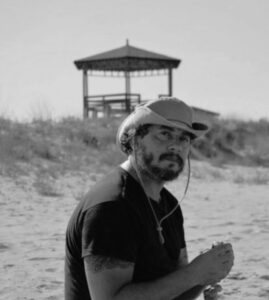 Co-editor and translator Ünver Alibey was born in Limassol, Cyprus. After graduating from the Department of English at Istanbul University, he worked as a teacher for ten years. Later, he entered the publishing business as a translator and literary agent before embarking on a writing career. His books, mostly weird, eco and science fiction, for children and young adults are published in several countries around the world. He also curated international science fiction anthologies like Omens of Doom, Star Maidens, Radioactive Dreams and Uncharted Worlds, which have been published in Italian. Greek, Dutch, Turkish, and German.
 Proofreader Jim Henderson is a Colorado writer of fun, varied, and sound science fiction adventures of various types. He is the author of the 9-book Mantis Saga, the story of the crew of the scout ship Mantis, as well as Viper: Boat-571, a military sci-fi adventure. Most recently, he published Inspector Giskard, a sci-fi mystery set in Colorado. Fun, adventure, aliens, space combat, robots, humor, and excitement abound, with deeper themes, character evolution, intrigue, mystery, and even romance. Jim is an Air Force veteran and cybersecurity professional. He is an aficionado of science fiction books, movies, TV, and games. When not working or mentally exploring the universe, he enjoys hiking, kayaking, gaming, and his eight grandchildren.
 Proofreader Zach Smith is a writer of creative non-fiction and short fiction in a variety of genres from the suburban Philadelphia area. Recent stories of his have appeared in Grandpa’s Deep Space Diner and New Pop Lit. He is currently working on publishing three story collections: Clouds Over Pancake Mountain, Tales Along Turtle Heart Road, and Realms Beyond Midnight World: A VHS Mix Tape. You can find links to some of his other stories and obscure reviews at: theobscuritysymposium.wordpress.com.